Part Two: Who wants this job- you or your mom?

Every recruiter’s pet peeve- when a girlfriend, boyfriend, best friend, wife; or in this case- parent, phones on behalf of their child to find out about jobs.

When you are starting your career, there is not a lot on your CV to “sell” you.  Most of the time when we book in a school leaver or graduate with no experience for an interview, it is because they impressed us with their communication.

If you are not the one communicating with us, how will we get to know you? How will you form connections/ network? How are we supposed to know that you are confident enough to speak to people on the phone or construct a professional email?

(A side note to the parent: I know you care.  I know that it’s easier for you to just get it done.  I know you are at work to access to your employers’ phones and internet.  I am a parent too. But you undermine your children when you phone for them.  Respect them enough to let them do this themselves.)

What they didn’t tell you about looking for a job in school- Part one: Looking for a Job starts with Job Portals

Gone are the days of looking for a job in the local newspapers.  Today you look for employment opportunities digitally.  And the number one place is on Job Portals. A job portal, also known as a career portal or employment website, is a modern name for an online job board that helps applicants find jobs and aids employers in their quest to locate ideal candidates.

Internationally Indeed and Monster are popular, but in South Africa, you want to get your CV on Careers24, Career Junction and PNet, among others.  You can also search for jobs on Gumtree, Job Mail and various social media groups, especially on Facebook.

Its important that you include as much detail as possible when uploading your CV onto these websites.  Prospective employers will search this data base of CV’s using “key words” and if those words are not on your CV, you CV will not show up on the search.  ALL experience is important, when you have limited experience.  Include the subjects that you studied, and all the computer packages that you have worked on.

It can be tedious uploading all the information on the forms as well as your CV, but be as detailed as possible.  I promise- you will be grateful for the initial effort later!

Profile Pictures on CV’s

The latest trend in recruitment seems to be putting a photo of yourself on your CV.  The majority of the population hate having their photos taken, are naturally critical of themselves, and generally object to this.  I have to admit, if I was in your shoes, I would too!  But the reality is, that employers want these photos, so this may help you to understand why, and what your ideal photo should look like.


WHY PUT A PHOTO ON YOUR CV?

I cannot speak for every recruiter, and certainly I am sure that there are those people that are asking for photos for the wrong reasons.  RESOURCE recruitment does not ask for a photo when you apply for a job through us, but we take one at the interview, which we put on your CV that we will send to our clients.

Many people are visual, and it helped us remember the candidate, a year or two down the line.  Clients then started requesting photos.  When they are interviewing several people in one day, it helps to look back on the CV and photo, to recall and reflect on the interviews.  Clients will also phone us three months down the line, and say, “Remember we interviewed that lady for the sales position, and she was not suitable.  Well another position has opened up, that she would be perfect for!  She was the one with the really cool afro.”  A glance at a photo, and they know they have the right person.


But probably the most important reason for putting a photo on your CV is that it makes your CV personal.  It makes a piece of paper, a person.  The candidates getting short listed, are the ones with pictures on their CV, it is not because of their good looks!  A few years ago we placed a senior bookkeeper.  All the applicants happened to be between 55 and 59 years of age.  One of the applicants did not want a photo taken for their CV (which we respect).  When the client short listed candidates for interviews, he asked to see all the candidates except the one without a photo.  When I asked him why he did not want to see her, he replied, “I don’t know.  I don’t get a good feeling about her CV.  Let’s see the others first.”


THE DO’S AND DON’T’S OF PROFILE PICTURES

Here are a few common mistakes to watch out for when putting a profile picture on your CV.  Always remember the aim- to market yourself as a professional, not to win admirers and friends.

Blurry or Too Small

Ideally your photo should be 200 x 200 pixels or larger. Anything smaller and you’re guaranteed to end up with a fuzzy or teeny tiny image If possible chose a square head shot, as it will work with other social media accounts.

Too Close or Too Far Away

Stick with a standard head shot for your profile pic. Prospective employers won’t be able to identify you from a picture too far away.

The Group Shot

Remember, this picture is supposed to represent your professional brand – no one else’s. Don’t make recruiters guess which person you are in the photo. Use an image that shows you and only you.

The Crop

Cropping yourself out of the group shot doesn’t work either. While it may be your favorite picture, no one wants to see half of your loved one’s face or your best friend’s hair on your shoulder.

Too Serious

Opt for photos where you’re looking at the camera and smiling. You want to appear friendly and approachable.

Goofy Expressions

Remember, this image is supposed to represent your professional brand. When you look at your profile photo, does it send the same message as your resume?  This includes NO pouty lips!!

No props, baby pics and pets.

Save these cute pics with your toddler or puppy for your personal social-media channels such as Facebook or Instagram. Make sure that you are not holding alcohol or cigarettes, and that you don’t have any props in the picture indicating that you are off to do something, such as a motor bike helmet or fishing rod.  Stick to a photo of yourself for your professional profiles.

No Selfies

This is a professional photo of you.  Ask someone to take it, rather that have your hand shooting out the corner of the photo.

Backgrounds Count

Before you put a photo of you in a nightclub, or most commonly a bathroom, think about the impression this makes.  Either a neutral background is good, or alternatively at your desk or in a professional setting is always good.

Dress to impress

Dress in appropriate work clothes.  No evening dresses, wedding gowns, bikini tops, topless men or sky diving suites if you want to be taken seriously.


It’s totally up to you if you put a picture on your CV or not, but if you are going to, make sure that like all things when looking for a new job, it markets you the way you want to be viewed by prospective employees.


If you are Applying for more than one Type of Job, Have More than one CV.

Looking for a employment is a sales job.  It’s all about marketing your CV to potential employers, looking for opportunities, building your brand.  Whether you fancy yourself as a sales rep or not- tough- now is the time to learn how to sell.


And the first thing that you have to do, is get your brochure (CV) professionally and appropriately drawn up!


If you decide that you are a secretary and would happily be a secretary, but would equally like the idea of getting into Events/ PRO or Sales Coordination position, because you have already done a bit of this, then you need to have a cv that sells you for each line of work.   Similarly, you may be a draughtsman who is keen to also try mechanical engineering or technical sales.


The first page of your CV will remain the same for all the jobs you apply for.  This will contain your personal information, contact details and ideally a professional photograph of you.


The second page will contain your computer skills and education.  Here you will list the skills most relevant to the job you are apply for first, and in more detail than the less relevant qualifications.  It’s often a matter of just switching the order around.  But the person reading your CV will assign the most importance to the skills they read first and that dominates the page.  For example- you are a draughtsman applying for a technical sales position as well.  When you apply for the draughtsman jobs, the Dale Carnegie course is not really that relevant and would be at the bottom of the skills section, if there at all.  But if you are applying for a technical sales job, putting this first, immediately gives the impression you have people skills.


The next section is the career history.  Always start with the most recent job first, and put dates and duties.  But the duties that are relevant to the position you are applying for, should appear first, and in more detail.  A good example is that you are an Office Administrator/ General Accounts Clerk.  You want to apply for a debtor’s position.  You need to take your debtors duties and put them as the first duties under that place of employment.  You may have just written “Debtors” as one of many points.  Now you need to elaborate.  What is the size of your debtor’s book and how many accounts do you handle?  Do you do invoicing and statements? Do you phone for money? Do you allocate payments off the bank statement? Do you deal with debtors queries?  If the first 5 points listed under duties are debtors, even though after that are a bunch of other unrelated duties, you have still made the impression that you are a debtor’s clerk!


Finally, if you don’t have a lot of skills and experience in the area that you are applying, but it is your passion and you know a lot about it through your hobbies and research, then add this in.  If at all possible, include it under the career section and give examples of your work.  Maybe you designed a website in your own time to market your wife’s business?  Or you do your husbands bookkeeping in the evenings?  Or you won a quilting competition and you want to get into the textile industry.


When I look at your CV, and you are applying for a particular position, your CV needs to give the overall impression that you are suitable for that position.


But… never lie and misrepresent yourself.  You can promote and emphasise why you are suitable, but don’t ever lie.  One lie will discredit your whole CV.


Finally, The Golden Rule:- “If it’s not on your CV, you never did it.”

Getting Feedback on your Applications

GETTING FEEDBACK ON YOUR APPLICATIONS


Not getting feedback when you apply for jobs can be so frustrating and demotivating!  But, instead of being powerless in the job seeking process, why not  be more proactive with your communication and take control of the feedback process as much as you can?  Here are a few tips that may help you take control of the situation:-


The ability to communicate effectively and professionally at all levels, is a skills that all businesses seek.  It’s one of the first things that is assessed in interviews. You can be a genius, but if you can’t communicate, no one will ever know!  How you communicate before you even get the interview, and during the interview and shortlisting process, can make all the difference at the end of the day!

Listening & Interpreting Information
Being a good listener is one of the best ways to be a good communicator. No one likes communicating with someone who only cares about putting in her two cents, and does not take the time to listen to the other person.

Sometimes, recruiters put specific requirements on how to apply for a vacancy.  There are many reasons why they will do this, but failure to follow the instructions, will ensure that you start the process on a negative note.  If the application asks for CV’s to be emailed, faxed or posted- use this means to deliver your application.  And if they ask for a covering letter or supporting documentation (or none at all) – listen to the instructions.  If you are not communicating in the way they want, they may reject your application, without you even knowing, and this is the reason you are not being contacted for interviews.

Keep it short and to the point!
Good communication means saying just enough – don’t say too little or talk too much. Try to convey your message in as few words as possible. Say what you want clearly and directly, whether you’re speaking to someone in person, on the phone, or via email. If you ramble on, your listener will either tune you out or will be unsure of exactly what you want. Think about what you want to say before you say it; this will help you to avoid talking excessively and/or confusing your audience. Often people talk themselves out of a job. Nerves kick in and they start talking and just can’t stop and end up telling way more than they should.  Keep it short and sweet, and remember this is a professional exchange, not a friendly chat!

Friendliness
People like happy, friendly people. The effort it takes to smile, be friendly and patient; will be the best investment you can make when looking for a job. I know that you will get frustrated and irritated with the process, everyone does, but avoid making a phone call when you are in a negative mood, and check the tone of your email.

Be aware that when you get negative, stand your ground and confront a potential employer or recruiter, you may make your point, but chances are you will not get the job.  Always be assertive in a constructive, positive manner!


Picking the Right Medium
An important communication skill is to simply know what form of communication to use.

Initially, always follow the medium that the advert asks for the application.  This shows that you respect their process and can follow instruction.  If it is not stated, always apply in writing, via email.  Attached your CV and anything that is requested, but at the initial stage, avoid attaching lots of supporting documents.  Try and make the recruiter’s job as simple as possible.

From this point, you need to get the balance right- when it is appropriate to continue on email, phone or maybe even pop in to see the recruiter.  Too many phone calls or an unsolicited visit, may be inappropriate, but there is a lot to be said for picking up the phone.  (But never let anyone else phone on your behalf!!)

Feedback
And the most important bit of advice from this newsletter- ASK FOR FEEDBACK! As demotivating as it may be, it is a reality that you are one of hundreds of people applying for a position, and there is often just one person going through the CV’s and the process. If you want feedback you need to pick up the phone or send an email.  Not only will this give you constructive feedback on where your CV or skills may be lacking, but it is an opportunity to build relationships with the recruiter.  Knowledge is power, and knowing why you have not been short listed, can be extremely motivating (as strange as that may seem!).  If you have not passed the email stage of applying, then forward your original application, and ask for feedback (don’t make the recruiter go looking for your application).  If you have been in for a personal interview, then pick up the phone and start building relationships.

Relationships are a two way street, so don’t apply for a job and then wait to get a phone call.  Be proactive, and drive the process!  Start interacting with your recruiter, and I promise, you will be at the top of their minds next time a job comes in, and they will start communicating back!


Tips for Looking for a Job Online

10 TIPS TO LOOKING FOR JOBS ONLINE


Along with all things, how we look for jobs is changing rapidly every year, and in just the last 10-15 years the recruitment industry has moved almost completely from advertising in newspapers and receiving paper (fax, posted or delivered CV’s), to advertising electronically and receiving digital CV’s either via email or uploaded onto websites.  The industry is changing so rapidly, that a lot of schools have no even started teaching school leavers about job portals, and if you are new to the job market after being away for a while, you may find it quite daunting!

Hopefully, these tips will help you navigate looking for a job on line a little easier.

  1. Be careful who you ask for advice

Everyone is an expert!  Everyone likes to tell you what you are doing wrong, and what you can change (even if it does not need to be changed).  You can ask parents and grandparents for assistance and guidance in your education, maybe dealing with your boss and how to resign.  But when it comes to preparing a CV or posting your applications online, unless they currently are responsible for recruiting staff, they may not be the experts to turn to.

  1. Use reputable websites or job portals

There are a lot of job portals out there that take adverts off other websites, and place it on their websites to drive clicks/ traffic to their websites.  These are not the websites that you want to be visiting because often the jobs you are viewing are outdated or invalid.  You want to be using websites where the advertiser placed the job themselves, has the correct email address for responses and a deadline for the advert.  RESOURCE recruitment always keeps their jobs updated at https://2r.co.za/category/vacancies/ .  Other good websites to keep an eye on are Pnet, Careers24, Career Junction, IOL and Gumtree.

  1. Make sure the KEY WORDS are in your CV.

When I search for a suitable applicant among CV’s, I use “Key Words” to find applicants with the required skills.  This means that if those skills (key words) are not on your CV, you never did it (even if you did), and you won’t be short listed.  Keywords would be, depending on the job requirements, things like- Pastel, Syspro, reconciliation, VAT, balance sheet reconciliations, statutory returns, payroll and Forex for a bookkeeping position; or litigation, conveyancing, Dictaphone typing, minute taking and paralegal for a legal secretary position.  Think about what job or industry you are wanting to get into, and then make sure these words appear on your CV

  1. Avoid abbreviations

Don’t assume that the person reading your CV will know your industry abbreviations and lingo.

  1. Fill out the registration form in full

I know that it is time consuming to do this when it is all on your CV, and you have probably filled out a hundred forms similar to do this before, but it is important.  Remember, “If it’s not on your CV you never did it”, so “If it’s not on the application form, you also never did it!”  (If the company then sends you another application form to fill out, you need to complete this form too.)  Recruiters are going through literally hundreds of applicants, 80% of which are totally unsuitable, and these application forms from the companies are created to streamline the short listing process.

  1. Keep your CV Updated

This is normally the main reason that the most suitable applicants are NOT short listed.  Their CV is not updated to show their latest experience; that they now live in the specified area; that they now have a car; that they have completed a qualification; or that they are available immediately.

  1. Put your email address on your CV

It stands to reason that if you are applying for a job online, you should have your email address on your CV in addition to your phone numbers.  And don’t forget to check that email address daily!  If your CV is forwarded to someone else in the company, saved or printed- it may be separated from your original email.  (And we should not have to say it- but remember your phone number too!)

  1. Social Media Accounts

If you are applying online, chances are that the recruiter will google you, or more accurately- Facebook- stalk you!  If you have not put your privacy settings on your social media accounts, you are inviting them into your personal lives.  Do you want to be judged on your political views and what you did last Saturday night; or that you are home from work again with a sick baby; or that all your posts are made during business hours?

LinkedIn is huge internationally, but it seems to be gaining popularity now in South Africa.  This is the “professional” version of Face Book.  This is the face you present to future employers and network.

  1. Get your CV out there

Looking for a job is a “stats game”.  The more people who have your CV, the sooner you will find something.  The more portals your CV is on, the more companies will view your CV.  The quicker you reply to emails requesting information or interviews, the more interviews you will attend.

  1. Keep your Account Current

The final tip is to keep your profile current on the portal.  Each month, go in and edit something.  It’s not important what you edit.  When I am searching for applicants, those that were active most recently will appear first, and those that were last active six months ago, I probably wont look at because, chances are, they have found something.  The job portal does not show when you registered, it shows when you were last active.


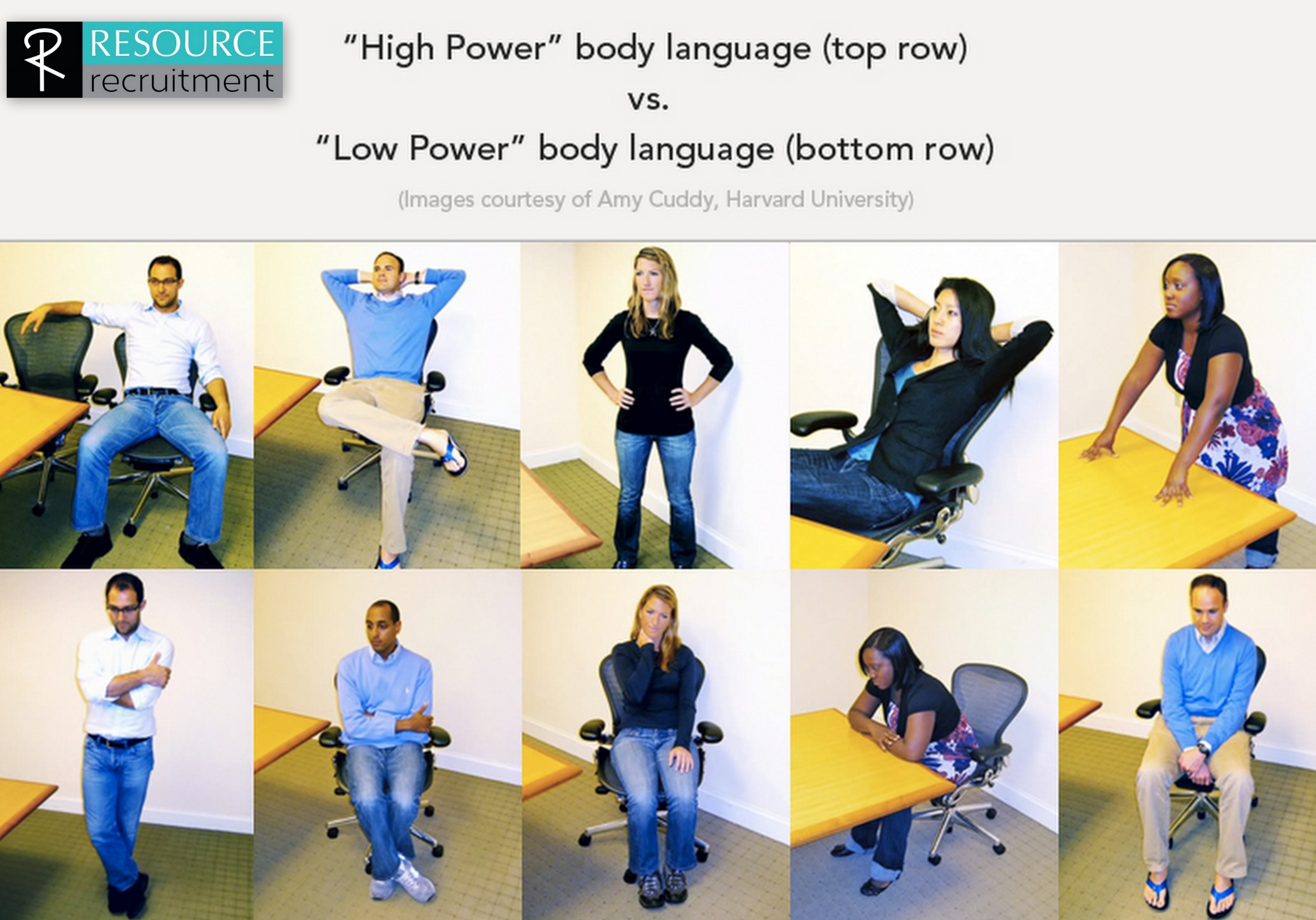
How to look and feel POWERFUL in your next interview… even if you are not on the inside.

We all know the importance of making a good first impression, and the importance of body language in doing this.  It’s probably the single biggest weakness we see in job seekers attending interviews- they often let nerves get the better of them, which translates through poor body language as a negative attitude or presence.

Here are a few common mistakes we see with body language:-

  • Poor posture- slouching (lazy), leaning forward (like you going to make a run for it) and leaning back (too casual), can all send the wrong message. Sit up straight, without being rigid and look alert and engaged.
  • Eye Contact- make eye contact, especially when shaking hands, but be careful to not stare too long or have fidgety eyes- constantly looking around- like your attention is elsewhere.
  • Keep your arms neutral- don’t cross them, hold them behind your back or put them in your pockets.
  • Don’t fidget and bounce. This is the most common.  Interview nerves bring out the bouncy leg, the itches and hair that constantly needs adjusting.  And this nervous energy is distracting the interviewer from what you are actually saying.

If poor body language can make us appear nervous, incapable, submissive, unconfident and negative, then what if the opposite was true?  What is we posed with the correct, empowering body language- would this make us feel and appear confident, positive, assertive and optimistic?  This is exactly what Amy Cuddy discovered in her research:-

Our minds may change our body (language),

but our body (language) can also change our minds!

Amy Cuddy researched one of life’s most simple tricks- Power Posing.  Power Posing is the act of taking a posture of confidence, even when you don’t feel confident, to make yourself more dominant.  (Its seen in nature with an ape banging his chest, a snake rises to attack and birds extend their wings and tail feathers to assert themselves.)  Her research showed that sitting or standing in a certain way, for as little as two minutes, raises testosterone levels and lowers stress hormones, and ultimately effects the way you interact with people.  Power Posing is especially beneficial when facing a “social threat” where you are being evaluated, such as negotiating deals, pitching ideas and job interviews.

Examples of High and Low Power Poses

Power Poses involve stretching the body to take up more space and appear more powerful.  Take a minute to stand up, feet slightly apart, hands on hips, shoulders back and chin slightly raised.  Or lean forward and put your hands on the desk, placed wider than your shoulders.  I am sure that you immediately feel the power shift if you have been sitting hunched over your computer or desk.


If you have 15 minutes to spare, and want to find out more, I would strongly recommend that you follow the link and watch Amy Cuddy explain power poses, give examples of various poses and show you how you can “Fake it until you Become it” (https://www.ted.com/talks/amy_cuddy_your_body_language_shapes_who_you_are) !  This article also elaborates more on 8 power poses for work, has some great pictures to illustrate the point. (http://www.businessinsider.com/power-poses-interview-body-language-2014-3 )


It’s the little changes that we make in life, that often have the biggest impact.  So, before your next interview, don’t sit in reception making yourself as small as possible.  Sit up straight, shoulders back, chin up and arms open; or take two minutes in the bathroom or parking lot before the interview, in a power pose.


Empower yourself so that when you leave the next interview, you know that you have showed the best there is of you, and made the best possible first impression!

peanut


Let’s Chat

The world is changing and so is the way we do business.  2020 has seen businesses globally, from big to small, being given the “virtual shove” into changing the way that they do things- working remotely and communicating electronically.


Since the day I opened RESOURCE recruitment almost 20 years ago, we have prided ourselves on being leaders in e- recruitment. With a Facebook Following of over 20 000 job seekers, almost 10 000 connections on LinkedIn and a Bulk Mailer of 35000 active job seekers (in addition to the regular online portals most employment agencies use), we have a very big digital footprint.  All that being said, I have always been adamant (and still am) that we need to maintain the human connection and personally meet our clients and candidates, get to know their businesses and them as people, and not be tempted into communicating exclusively electronically.

But, 2020 has had different ideas for me, and I am being forced to grow and evolve and embrace video meetings like Skype and WhatsApp Video Calls.

Here are some tips that I have researched that will help you prepare and ace your next video job interview!

  1. Dress to impress
    It is so tempting to not dress up for your interview, if you are sitting at home in casual wear.  There are two reasons why you should dress to impress.  The most important is the way that it makes you feel when you power dress in a smart outfit, versus the t-shirt you were going to wear.  The second is that research shows that on video job interviews, the details are amplified.  The person on the other side of the camera is more likely to notice your makeup, earrings and nail polish; than a person would face to face.  I have also read that shades of blue, black and white are the best colours to wear, because red, orange, yellow does not always appear good to other screens.


  1. Avoid interruptions

Most important- PICK A QUIET SPOT WITHOUT INTERRUPTIONS.  Tell people that you are having a video meeting and that you cannot be interrupted.  If you can, lock the door so that no one walks in mid-meeting.  Personally, when I have tried to have a conversation with someone and there is a child screaming, or what feels like a party going on in their background, and I am battling to hear them, I get irritated at the lack of respect and professionalism that they are showing.  I can also only imagine how distracted they are feeling.


  1. Prepare your surroundings
    In a traditional interview, you are going to a company, or inviting them into your meeting room.  But on video interviews, you may be inviting them into your home.  Make sure that your backdrop is neat, uncluttered and does not reveal too much about you personally.  Be authentic.  I once had someone send me a video interview with some motivational books strategically placed on their desk to impress.  When I asked about their opinions on them, it was clear they had never even read them!


  1. Close other programs on your computer.
    Getting notifications during your interview is distracting and unprofessional. Before your interview, make sure all other windows on your computer are closed (especially if they make a noise).


  1. Look at the camera, not the screen.
    It is very tempting to watch yourself or your interviewer during a video session but looking directly at the video camera is the only way to maintain direct eye contact with your interviewer.


  1. Use notes, but not too many
    Don’t be afraid to help yourself with post-it notes or a copy of your resume handy when you interview. A benefit of having a video interview is that you can have a cheat sheet in front of you so that you don’t have to memorize everything and can keep your focus. However, avoid having scripts written out and being so concerned about the notes that you disrupt the flow and human connection of the interview by awkward pauses and papers flapping.


  1. Keep your profile professional.
    Unlike face-to-face interviews where your first impression is made by arriving well-presented and smiling as you shake someone’s hand, when you do a video interview it is different. The first impression is your profile, your username and your picture and before the call even clicks through you have made an impression. If your profile is not professional- create a new one.


  1. Watch your body language.
    Sit up straight, but keep your shoulders relaxed.  Chose a desk chair over a comfy couch.  Try not to fuss with your hair or fiddle with things on your desk.


  1. Practise makes perfect.
    The job interview itself or meeting is not the time to test the audio settings and internet connection and if your Skype is working.  Do that beforehand.  Video call some friends and ask them how you look, what the background looks like, and how they can hear you.  Get comfortable with seeing yourself as you talk to someone, and not getting distracted by that image, while you make a connection.


  1. Stay connected and engaged
    It’s easy to lose the connection with the person on the other side of the screen when you are talking too much, or not to notice when their interest has been lost.  Try have a two-sided conversation, rather than launch into long speeches.


This is new to us too, so we would love to hear any hint, tips and hacks you may have for video interviews or any experiences that you would like to share.

CV Fraud Punishable by Law

In August 2019 an Amendment to the National Qualifications Framework Act was gazetted, which will have a direct impact on job seekers and employers.  Among other things, the act makes direct mention of job applicants and employees misrepresenting themselves on their CV’s and job applications, and such misrepresentation may be punishable by fine and/ or imprisonment.


Below is a summary of what the amendment says with regards to this.  If you would like a copy of the amendment, please feel free to email us or visit the department of labours website (www.labour.gov.za)


A person will be deemed guilty of an offense if:-

  • A person makes or causes to be made a false entry in the national learners’ records database; is a party to the falsification of; or with a fraudulent purpose, knowingly provided false or misleading.
  • A person or training provider is guilty of an offence if they claim to be offering a qualification or part qualification registered on the NQF whereas that qualification or part qualification is not so registered.
  • A person is guilty of an offence, if they falsely or fraudulently claims to be holding a qualification or part-qualification registered on the NQF or awarded by an education institution or obtained from a lawfully recognised foreign institution.
  • Any person or training institution is guilty of an offence if it falsely claims to be registered and accredited as an education institution.

If a person or training institution is convicted of any offence under this Act, the court that imposes the sentence shall consider as an aggravating factor the fact that the offence was—

  • committed with the intent to gain financially, or to receive any favour, benefit, reward, compensation or any other advantage; or
  • gained financially, or received any favour, benefit, reward, compensation or any other advantage.

Any person convicted of an offence in terms of this Act, is liable to a fine or to imprisonment for a period not exceeding five years, or to both fine and such imprisonment.

The National Minimum Wage Act


The National Minimum Wage Act

As of January 2019, the first ever National Minimum Wage Act came into effect, and while most employers have embraced this initiative, we thought that we would give you a summary to re-cap.


What is the rate?

The legislation stipulates a minimum national rate of R20 per hour, or R3 500 per month, depending on the number of hours worked.

The R20 an hour rate will be phased in slowly in the agriculture and domestic work sectors, with workers earning R18 and R15 per hour respectively.  Employees who are on volunteer programs or learnerships are exempt from the act.

This means

DAILY MINIMUM WAGE         R20 x 8 hours = R160  or R20 x 9 hours = R180

WEEKLY MINIMUM WAGE     R20 x 40 hours = R800 or R20 x 45 hours = R900

MONTHLY MINIMUM WAGE R800 x 4.333 = R3 466.40 or R900 x 4.333 = R3 899.70


Employees are also entitled to be paid for a minimum of 4 hours, even if they work fewer.

Allowances that make an employee able to work such as tools; equipment; transportation and accommodation) will have these allocations included when calculating their wage; as will bonuses, incentives, tips and gifts be excluded from the minimum wage.

No employee may make deductions in excess of 25% of the employee’s remuneration.


When did it become law?

 The National Minimum Wage will be applicable and enforced as from 1 January 2019


What happens if you do not pay the minimum wage of R20.00 an hour?

The minimum wage is law, so if you do not pay it, your staff can report you to the department of labour or the CCMA.  Even if your staff agree to work for less, or to get paid for fewer hours than four hours, they are still legally entitled to it, as it falls under the Basic Conditions of Employment Act.

The Act does allow for an employer to make an application to be exempt from paying the minimum wage, for not longer than one year.


When will the Minimum Wage Increase?

The Act states that the minimum wage must be reviewed after 18 months and increases in two years.  The review will specifically take into account inflation, productivity, the effect on employment and businesses ability to cope with the increase in wage expenses.


If you would like a copy of the National Minimum Wage Act, you can obtain one from the Department of Labour’s Website.  (http://www.labour.gov.za/DOL/legislation/acts/national-minimum-wage/national-minimum-wage)